Zarco Einhorn Salkowski, P.A. Zarco Einhorn Salkowski, P.A.2026-10-23T04:48:38Zhttps://www.zarcolaw.com/feed/atom/WordPress/wp-content/uploads/sites/1405103/2020/01/cropped-zarco-siteicon-32x32.pngOn Behalf of Zarco Einhorn Salkowski, P.A.<![CDATA[The Franchise Training Gap: What They Don’t Teach You at Training]]>https://www.zarcolaw.com/?p=655942026-10-19T16:31:15Z2026-10-19T16:31:15ZKey Takeaways on the Franchise Training Gap
Franchise training teaches you how to run the brand. It rarely teaches you how to run a business in real life.
The skills that actually determine survival in year one, managing people, handling payroll and compliance, and protecting your reputation locally, are usually left for you to figure out on your own.
Most franchise failures in the early years trace back to these operational blind spots, not to the brand or the product. Closing that gap early, before a crisis forces your hand, makes the difference between a rough patch and a business-ending mistake.
What Franchise Training Actually Covers
Let's give credit where it's due first.
Franchisors are excellent at teaching their system.
You learn the operations manual. You learn the equipment. You learn how to make the product taste right or the service run smoothly, every single time.
That consistency from location to location is the whole point of franchising. It's why customers trust the brand and spend their money.
But here's the thing. That training has a scope. And the scope stops at the brand's walls.
Fact: Franchise training often spends little, if any, time on employee management, local compliance, or reputation issues.
That's not a knock on the franchisor. Training the product/service along with how to run the business is their job. Applying that training in real life is your responsibility.
The Franchise Training Gap: What You're Actually Left to Learn Alone
1) People Management
Nobody teaches you how to fire someone.
In addition, nobody teaches you how to handle an employee who's great with customers but toxic with coworkers. Or the one who's always five minutes late but you can't afford to lose them.
These are judgment calls. They involve real people, real emotions, and real risk if handled wrong. A bad termination can turn into a legal headache fast, especially if documentation is thin or the reason isn't clearly work-related.
2) Payroll and Compliance
Payroll sounds simple until you're the one running it.
Payroll mistakes rarely announce themselves right away. You run payroll, everyone gets paid, and it feels fine. Then months later, a misclassified employee files a complaint. Or a state audit flags overtime you didn't know you owed. By then, the fix costs far more than doing it right the first time would have.
The fact is most new franchisees don't realize payroll isn't just "pay people on time." It's tax deposits, correct classification, accurate recordkeeping, and knowing which rules apply in your specific city or state. Franchise training won't walk you through any of it. Your payroll provider might not either, unless you ask the right questions upfront.
Tax withholding. Worker classification. Overtime rules that shift depending on your city or state. Scheduling laws in some markets that require advance notice to employees.
Generally, none of this shows up in franchise training. All of it can potentially trigger fines or lawsuits if you get it wrong.
3) Local Reputation Management
A bad customer experience can become a highly visible public review overnight.
One angry customer with a phone can now shape how your community sees your location. A screenshot goes viral in a neighborhood group.
In reality, your franchisor isn't going to respond for you. That's your reputation to manage, locally, often with no warning.
Tip: Read this article for ways to handle negative reviews.
4) Basic Financial Literacy
Can you read your own profit and loss statement?
Many new franchisees can't, not really. They know if the bank account looks healthy. They don't know why margins shifted, or when a slow month means "wait it out" versus "call for help."
That gap turns small cash flow problems into big ones.
We suggest finding out ahead of time if your franchise training program teaches you how to read your financial statement. If not, find someone or take an online course so you can learn how to do it yourself.
Why Proper Franchise Training Matters for Year One Survival
Here's a hard truth about franchising.
Like any small business, perfection doesn’t exist, mistakes happen.
Operational errors. A payroll inaccuracy that snowballs. A termination that turns into a claim. A reputation crisis that scares off local customers before the franchisee even knows what happened.
Year one is when these gaps get tested. The franchisor gave you the recipe. Nobody handed you the survival manual for the rest of it.
Sometimes, the franchise owners who make it past year one and are successful aren't the ones with the best location or the strongest brand. They may be the ones who filled these gaps early, before a crisis forced their hand.
The Bottom Line
Franchise training will make you good at running the brand.
It won't make you good at running a business.
The employee issues, the compliance questions, the local reputation fires. Those are yours to handle, and they show up fast.
The smart move is closing that gap before year one puts you to the test, not during it. Getting ahead of employment questions, documentation practices, and compliance basics early gives you a real advantage.
Because it's a lot cheaper than fixing a mistake after it's already cost you an employee, a fine, or a customer.
Finally, if you're a new or soon-to-be franchisee, don't wait for a crisis to find out what your training left out.]]>On Behalf of Zarco Einhorn Salkowski, P.A.<![CDATA[Private Equity: What Today’s Franchise Buyers Need to Know]]>https://www.zarcolaw.com/?p=655672026-09-29T15:55:07Z2026-09-29T15:55:07Zone of the driving forces behind it.
In this post, we’ll go over what today’s franchise buyers need to know about private equity, so they can make an intelligent choice in a franchise to own.
Key Takeaways
Private equity ownership is becoming more common in franchising today. It isn't going away.
With that in mind, private equity can bring real benefits to franchise buyers. Stronger systems. Better technology. More capital for growth, and sharper, more professional management.
On the flipside, it can bring pressure in the other direction. PE firms are managing toward an exit. That can mean rising fees, thinner support, and growth that outpaces the market.
Neither outcome is guaranteed. The ownership structure just adds a variable that wasn't there when a founder ran the show.
That’s why you need to know who owns your brand. You also need to know that owner's likely time horizon. Ask specific questions about fees, support, and growth strategy before you sign or renew.
Next, talk to current franchisees, not just the references you're handed. Their experience under the current owner tells you more than any pitch deck.
The same logic applies if a PE-backed group wants to buy your locations. Check their track record first. Know what they're building toward.
Finally-and this is important, private equity firms typically hold a business for three to seven years before selling it. Franchisees, on the other hand, are usually locked into agreements that run ten years or longer.
That mismatch in timeline is the whole story.
Why Private Equity Firms Love Franchising
Franchising is attractive to private equity for simple reasons.
For instance, franchise systems generate steady royalty income. They scale without the franchisor having to fund every new location. A strong brand can grow fast once outside capital and professional management get involved.
For a franchisor that's been run by its founder for twenty years, a PE buyout can bring real benefits. New marketing muscle. Better technology. A sharper focus on unit economics. Access to capital for national advertising that a founder-owned company could never afford alone.
In our experience, franchisees can sometimes feel this shift right away, and often for the better. Systems get more professional. Support teams grow. Processes get standardized in ways that help operators run tighter, more profitable locations.
Where Private Equity Can Go Wrong For Franchise Buyers
The upside is real. So is the risk.
That’s because private equity ownership changes the incentives at the top of the system. Franchisees should understand how.
Critically, a PE-owned franchisor is managing toward an exit. Decisions can be shaped by what makes the brand look strong on paper in three to five years. Not necessarily by what serves franchisees over the life of their agreements. That’s not good for franchisees.
That can show up in a few ways.
For starters, fee increases, as royalty structures and marketing fund contributions rise to boost the numbers ahead of a sale.
Next, aggressive growth targets, as a franchisor under pressure pushes development harder than the market can support.
Third, cost-cutting on field support and training, even as franchisees are asked to do more.
Finally, another sale down the road, bringing new priorities, brand new leadership, and a new learning curve.
None of this means private equity ownership is bad for franchise buyers by default. It means the ownership structure adds a variable that didn't exist before.
What to Watch For as a Franchisee or Prospective Franchise Buyer
If you're already in a system that's been acquired by a private equity firm, pay attention.
Watch how fees and required spending change over time.
Watch whether field support stays consistent or starts to thin out.
Determine if new unit growth in your area still makes business sense, or whether it's happening because the numbers need to look a certain way before the next sale.
If you're evaluating a franchise opportunity and the franchisor is PE-owned, ask direct questions. Like:
How long has this ownership group held the brand?
What changes have franchisees seen since the acquisition?
Is there a pattern of rising fees or shrinking support?
A good franchisor should be able to answer these questions without hesitation.
It's also worth looking at how the system has grown.
In this case, rapid, aggressive unit growth right after a private equity acquisition isn't automatically a warning sign. But it's worth understanding the "why" behind it.
Talk to current franchisees too. Not just the ones the franchisor hands you.
In addition, franchisee associations, independent Facebook groups, and validation calls you set up yourself usually give a more honest picture than a curated reference list. Ask those operators directly.
How has ownership changed the day-to-day experience of running a location?
Would they buy in again today, under the current ownership?
Are you glad a private equity group became involved?
A Note on Multi-Unit and Multi-Brand Deals
Private equity involvement in franchising isn't limited to buying franchisors outright. PE-backed groups also acquire large multi-unit franchisee operations. Sometimes rolling up dozens of locations across several brands under one ownership umbrella.
If you're a franchisee considering a sale to one of these groups, the same questions apply.
What's the group's track record with the brands it already operates?
Is it investing in the locations it owns, or are they running them lean while waiting for the right time to sell the portfolio?
The truth is that these roll-up entities can be excellent operators with real capital and discipline. They can also be financially engineered vehicles with little long-term commitment to any single brand. Knowing which one you're dealing with matters just as much as it does with a PE-owned franchisor.
The Bottom Line
Private equity isn't inherently good or bad for franchisees.
It's a factor, and an increasingly common one, that changes how a franchise system is likely to be run.
The franchisors that handle PE ownership well keep franchisee success and brand health in balance with investor returns. The ones that don't tend to show it through rising costs, thinning support, and growth that outpaces the market.
Either way, franchisees do best when they understand who's really calling the shots. And what that ownership group is working toward. That kind of awareness requires paying attention, asking good questions, and reading the fine print and hiring an experienced franchise attorney (https://www.zarcolaw.com/about/attorneys/ ) before you sign.]]>by Zarco Einhorn Salkowski, P.A.<![CDATA[The Franchisee Who Believed. The Lawyer Who Wouldn’t Back Down. The Case That Helped Change Franchise Law.]]>https://www.zarcolaw.com/?p=654802026-09-22T16:53:26Z2026-09-16T20:56:06ZRemembering Steven Alan Scheck, the Burger King franchisee whose courage and conviction helped advance franchisee rights, shape the career of Robert Zarco, and leave an enduring mark on the franchise world.Reviewed and Approved by Robert Zarco
Some legal cases begin as ordinary business disputes. A few come to stand for something much larger.
For Steven Alan Scheck, the issue was about justice and principle: a franchisee who had invested his livelihood in a business should have the right to expect that his franchisor would deal with him fairly.
For Robert Zarco, then a young Miami commercial trial lawyer, Scheck’s fight would become far more than an early case. It would become a defining battle, one that would test his convictions, help launch his own law practice, and set the course for a career taking on powerful adversaries “Against All Odds.”
More than three decades later, Scheck v. Burger King Corp. remains an important chapter in franchise law and in Zarco’s lifelong commitment to leveling the playing field for franchisees and business owners facing substantially more powerful commercial adversaries.
With Scheck’s passing at age 77, Zarco Einhorn Salkowski, P.A. remembers not only the franchisee behind a landmark legal battle, but also the entrepreneur, pioneer, friend, and man whose willingness to stand up for what he believed was right helped change the conversation about the relationship between franchisors and franchisees.
A Franchisee Who Refused to Back Down
Scheck was no stranger to the hospitality business.
A graduate of the Cornell University School of Hotel Administration, he built a decades long career in hospitality and held leadership positions at prominent properties including the Hershey Motor Lodge and Convention Center, the Concord Hotel, and New York’s legendary 21 Club.
He later became an entrepreneur, ultimately owning and operating four Burger King franchises and two full-service restaurants in Massachusetts, and serving on the National Franchise Association’s Board of Directors.
One of Scheck’s Burger King restaurants was located in Lee, Massachusetts, and benefited substantially from travelers using the Massachusetts Turnpike.
Then another Burger King opened approximately two miles away at a Turnpike location positioned to intercept many of those customers.
The consequences were devastating.
According to Zarco at the time, Scheck lost approximately $300,000 annually in sales, representing 30 to 35 percent of his existing restaurant’s gross sales. The financial impact of the franchise encroachment and resulting cannibalization ultimately forced Scheck into bankruptcy.
There was another problem: Scheck’s franchise agreement did not grant him an exclusive territory.
To others, that appeared to end the matter.
To Scheck and Zarco, it did not.
Robert Zarco explains franchise encroachment and cannibalization and the importance of protecting a franchisee’s market territory.
A Case Others Considered “Worthless”
Several larger, established law firms had assessed Scheck’s case as “worthless,” according to Zarco.
Scheck believed he had been treated unfairly. The young Miami commercial trial lawyer representing him saw something others did not: a principle worth fighting for and a case worth pursuing.Robert Zarco saw it differently. He was willing to take the case, take on Burger King, and give Scheck his day in court.
The absence of an exclusive territory, Zarco argued, should not necessarily give a franchisor unlimited discretion to exercise its contractual rights in a way that could deprive a franchisee of the benefits of the very agreement into which the parties had entered.
At the center of the argument was the implied covenant of good faith and fair dealing.
When Zarco left his prior firm to establish his own law practice in April 1992, he took Scheck and the case with him.
Scheck took a chance on the young attorney.
Zarco saw value and a challenge where others did not. More importantly, he saw a principle worth fighting for with the opportunity to do the right thing.
The “Key to the Courthouse”
There was still the practical reality of taking on one of the world’s largest restaurant companies.
Scheck’s business had already suffered severe financial damage. Complex commercial litigation against a major international franchisor required resources he no longer had.
Zarco agreed to pursue the matter on a contingency and results-accomplished attorney fee basis, providing what he would later describe as the “key to the courthouse.”
For Zarco, the concept was fundamental: the size and economic power of an opponent should not determine whether an entrepreneur has a meaningful opportunity to protect his or her rights and livelihood.
That principle would ultimately become part of the philosophy behind the national franchise law practice at Zarco Einhorn Salkowski, P.A..
A Decision That Helped Change the Legal Landscape for Franchisees
In Scheck v. Burger King Corp., 756 F. Supp. 543 (S.D. Fla. 1991), U.S. District Judge William M. Hoeveler denied Burger King’s request for summary judgment on Scheck’s claim for breach of the implied covenant of good faith and fair dealing.
The Court found that although Scheck did not possess an exclusive territory, that did not necessarily mean Burger King had an unfettered right to open nearby franchises without regard to their effect on his existing operation.
At the heart of Judge Hoeveler’s reasoning was the principle that while Scheck was not entitled to an exclusive territory, he was entitled to expect that Burger King would not exercise its contractual rights in a manner that destroyed his ability to enjoy the benefits of the franchise agreement.
Burger King sought reconsideration. In Scheck v. Burger King Corp., 798 F. Supp. 692 (S.D. Fla. 1992), the Court declined to retreat from its earlier analysis.
The significance extended beyond one Burger King restaurant in Massachusetts.
The case challenged prevailing assumptions about the balance of power in the relationship between franchisors and franchisees and helped advance the conversation about a franchisor’s obligations in exercising contractual discretion, particularly under the implied covenant of good faith and fair dealing.
Importantly, Scheck did not create the implied covenant of good faith and fair dealing. The doctrine was already recognized under Florida law. But the case became an influential authority in the franchise context and raised important questions about how those principles could apply when a franchisor’s exercise of contractual discretion threatened the economic interests of an existing franchisee.
Like many significant decisions addressing the boundaries of contractual discretion, aspects of Scheck have subsequently been distinguished, limited or questioned by other courts. Its historical importance does not rest on creating unlimited protection against competition or establishing an exclusive territory where none existed. Rather, the case helped advance the legal discussion about whether a franchisor’s contractual discretion may nevertheless be constrained by the obligations of good faith and fair dealing.
Robert Zarco discusses the importance of good faith and fair dealing in the franchisor-franchisee relationship.
A “Landmark in the Making”
The franchise community noticed.
On December 1, 1992, the Miami Review, then the Daily Newspaper of Business, Real Estate and Law, featured the litigation under the headline “Burger King Faces Franchise Fight,” with the sub-headline “Dispute over newer outlet could change industry practices.”
The newspaper described the case as a “landmark in the making.”
The article also quoted independent Miami franchise attorney Ronald Fieldstone, who was not involved in the case, describing it as a landmark and discussing its potential significance in clarifying a franchisor’s duty to exercise good faith when opening company stores or additional franchises.
Read the 1992 Miami Review coverage, “Burger King Faces Franchise Fight,” in Zarco Law’s In The Media archives.
What began as the fight of one financially devastated franchisee had become part of a much larger discussion about encroachment, cannibalization, contractual discretion, and the obligations inherent in the franchisor-franchisee relationship.
The case was ultimately resolved for an amount that has been publicly disclosed as exceeding several million dollars.
A case that several established law firms had dismissed as “worthless” had become aninfluential franchise dispute, challenging assumptions about the limits of franchisor power and the rights of franchisees.For Robert Zarco, the case had become something even more personal: a defining experience that revealed the kind of lawyer he wanted to be, the clients he wanted to fight for, and the powerful interests he was willing to challenge.
The Case Draws Academic Attention
The significance of Scheck v. Burger King Corp. soon extended beyond the courtroom and news media into legal scholarship.
In 1994, the University of Miami Law Review published a scholarly analysis devoted to the case: “Scheck v. Burger King Corp.: Why Burger King Cannot Have Its Own Way with Its Franchisees,” by Adam B. Leichtling, 48 U. Mia. L. Rev. 671 (1994).
Published only a few years after the federal court decisions, the article examined Scheck in the broader context of the franchise relationship, territorial rights, contractual discretion, and the implied covenant of good faith and fair dealing.
Its publication provides another important historical marker in the evolution of the case: what the Miami Review had described in 1992 as a “landmark in the making” had become the subject of dedicated academic legal analysis by the University of Miami Law Review in 1994.
Read “Scheck v. Burger King Corp.: Why Burger King Cannot Have Its Own Way with Its Franchisees” in the University of Miami Law Review.
The Principles of Scheck Live On
The issues raised by Scheck did not end with that litigation.
More than two decades later, Zarco would again litigate questions involving encroachment, non-exclusive territory, and the implied covenant of good faith and fair dealing, this time on behalf of longtime El Pollo Loco franchisees in California.
In 2018, Zarco Einhorn Salkowski reported that a Los Angeles County jury found that El Pollo Loco, Inc. breached the implied covenant of good faith and fair dealing in connection with two new corporate restaurants opened near an existing franchisee’s location. The firm noted the relationship between the legal principles involved in that dispute and those addressed years earlier in Scheck v. Burger King Corp.Read about Robert Zarco’s El Pollo Loco franchise encroachment verdict and the continuing relevance of Scheck v. Burger King Corp.
For Zarco, the connection underscored how issues first confronted with Scheck decades earlier continued to arise in disputes over franchise territories, contractual discretion, and the economic interests of existing franchisees.
More Than Three Decades Later, the Case Draws Attention Again
The story did not disappear with the end of the litigation.
More than three decades after the Miami Review described Scheck v. Burger King Corp. as a “landmark in the making,” the passing of Steven Scheck brought the case and the questions it raised back into the national conversation.
On September 10, 2026, Nation’s Restaurant News published “Steven Scheck, franchisee behind pioneering legal case, dies,” by veteran restaurant industry journalist Jonathan Maze, Editor in Chief of Restaurant Business.
Maze reported that Scheck’s 1989 lawsuit against Burger King helped solidify a franchise legal principle that continues today and examined how the case gave franchisees a meaningful legal tool when challenging the exercise of franchisor discretion.
Read Jonathan Maze’s Nation’s Restaurant News coverage, “Steven Scheck, franchisee behind pioneering legal case, dies.”
Days later, QSR Magazine published “Remembering the Legacy of Steven Scheck,” revisiting the Burger King dispute and the broader issues at its center, including franchise encroachment, cannibalization and the implied covenant of good faith and fair dealing.
The QSR story also explored the human story behind the litigation: a franchisee facing devastating business losses and a young attorney willing to pursue a case that several larger, established law firms had assessed as “worthless,” according to Zarco.Read QSR Magazine’s “Remembering the Legacy of Steven Scheck.”
The Nation’s Restaurant News story also received broader business and financial distribution through Yahoo Finance, extending the Scheck story beyond the restaurant and franchise industries.
Read the Steven Scheck story on Yahoo Finance.
The case also has a dedicated Wikipedia entry documenting Scheck v. Burger King Corp., including its factual background, procedural history, federal court decision and legal issues involving franchisee territorial rights and the implied covenant of good faith and fair dealing.
Read the Wikipedia entry on Scheck v. Burger King Corp.
The progression tells its own story.
1992: The Miami Review describes a “landmark in the making.”1994: The University of Miami Law Review devotes scholarly analysis to the case.2026: Nation’s Restaurant News revisits Scheck’s “pioneering legal case.”2026: QSR Magazine examines “the legacy of Steven Scheck.”A dispute that began with one Burger King franchisee in Massachusetts had become part of the broader history of franchise law, still being examined and discussed more than three decades later.
From One Franchisee’s Fight to a Lifelong Mission
For Zarco, Scheck became far more than an early case.
It demonstrated that one franchisee, given the opportunity to be heard, could challenge an industry giant and influence the rights of those who followed.
Today, Robert Zarco is Founder and Managing Partner of Zarco Einhorn Salkowski, P.A., appropriately known as The Great Equalizers.
Over the decades that followed, Zarco and the firm have represented thousands of franchisees associated with more than 500 franchise systems across 44+ states and 20+ countries, including 40+ franchisee associations, continuing a mission centered on creating leverage and leveling the playing field.
The firm also continues to utilize creative hybrid contingency and results-accomplished fee arrangements in appropriate cases, helping qualifying franchisees and business entrepreneurs pursue their rights when the cost of complex commercial litigation might otherwise place meaningful legal representation beyond their reach.
The philosophy and lessons that emerged from Scheck’s fight remains remarkably simple and relevant over three decades later.
Access to justice should not depend upon the size of the opponent.
More Than a Client
The legal case eventually ended.
The relationship did not.
What began as an attorney-client relationship became a friendship between Scheck and Zarco that endured for more than three decades.
“My dad was never afraid to stand up for what he believed was right,” said Hayley Scheck Antonian, Steven’s daughter. “He was an entrepreneur at heart, and he believed deeply in his businesses and the people he trusted. He took a chance on Robert more than three decades ago because he believed in him and in the case he was fighting. What began as a business relationship ultimately became a lifelong friendship. I’m incredibly proud that my dad’s courage and conviction became part of a legacy that continues to impact franchisees today.”
For Zarco, memories of Scheck extend far beyond courtrooms, legal briefs, and franchise law.
“Scheck was a wonderful human being,” Zarco said. “His larger-than-life physical presence was balanced by his warm heart and teddy bear personality, yet he remained firm in his convictions.”
Zarco also remembers the courage it took for Scheck to challenge a powerful franchisor at a time when doing so carried substantial personal and financial risk.
“The franchisee community respected him greatly for standing up for what he believed in and not living in fear of retaliation,” Zarco said.
Their friendship continued through the decades.
“We developed a personal relationship that lasted more than three decades,” Zarco said. “We spoke frequently and supported each other through personal life issues as they arose. I will miss him.”
The Man Behind the Case Name
Steven Scheck’s life did not end with the litigation that bears his name.
In 1993, he moved to Los Angeles, where he became General Manager of the Sportsmen’s Lodge Hotel in Studio City, a position he held for many years.
His professional life reflected what those who knew him understood personally: Steve Scheck was an entrepreneur and hospitality professional who believed deeply in his businesses, his relationships, and his principles.
Steven Scheck never set out to become the name behind a consequential franchise case. He was a businessman who believed he had been wronged and had the conviction to stand up for what he believed was right, even when the odds were against him.
There could have been no Scheck v. Burger King Corp. without Steven Scheck. It was his livelihood at stake, his willingness to fight, and his faith in a young lawyer that set everything that followed in motion…with a mission that continues to this day.
And the legacy of Robert Zarco and the law firm he founded will always carry a piece of Steve Scheck’s legacy with it.
Steve Scheck believed in Robert Zarco. Robert Zarco believed in Steve’s cause. Together, they left an enduring mark on the franchise landscape, helping level the playing field between franchisors and franchisees and showing what can happen when conviction meets courage.The rest is history.]]>On Behalf of Zarco Einhorn Salkowski, P.A.<![CDATA[The devil is in the disclosure: How franchisors hide the truth in plain sight]]>https://www.zarcolaw.com/?p=654752026-09-10T19:57:21Z2026-09-10T19:57:21Z investing your life savings into a franchise opportunity, only to discover the flashy presentation made by the franchisor to convince you to join their model masked a graveyard of failed locations. Unfortunately, this nightmare scenario plays out more often than you might think — and it is often preventable.
While franchise disclosure laws exist to protect prospective franchisees, savvy franchisors have learned to navigate the gray areas, presenting information in ways that are technically compliant yet practically misleading. Understanding these tactics can mean the difference between building a thriving business and facing financial ruin.
The disclosure illusion
The Federal Trade Commission requires franchisors to provide a Franchise Disclosure Document (FDD) that includes information about franchise closures, terminations and transfers. However, the way the franchisor presents this information often obscures the full picture rather than clarifying it. Misleading tactics can include:
Burying unfavorable statistics in dense legal language that discourages careful reading
Categorizing failed franchises as "voluntary terminations" rather than acknowledging business failures
Presenting data in ways that minimize the appearance of closure rates
Providing outdated financial performance representations that do not reflect current market conditions
The law requires franchisors provide these disclosure documents, but that does not mean the franchisor will present the information in a manner that serves your best interests.
The cost of deception
When franchisees make decisions based on incomplete or misleading information, the consequences extend far beyond financial loss. Families deplete retirement accounts, entrepreneurs abandon stable careers and individuals take on crushing debt — all based on a false premise of what their franchise investment will deliver.The emotional toll compounds the financial damage, as franchisees struggle with feelings of failure and betrayal when their businesses collapse.
Legal pathways to justice
Fortunately, franchisees who have been misled have legal options. Depending on the circumstances, remedies may include:
Rescission of the franchise agreement and recovery of initial investments
Damages for losses incurred due to fraudulent misrepresentation or omission
Claims under state franchise relationship laws that provide additional protections
These legal remedies exist because legislators recognized the inherent power imbalance in the franchisor-franchisee relationship. However, pursuing these claims requires acting quickly, as statutes of limitations apply.
Protecting yourself starts with knowledge
The franchise model offers genuine opportunities for entrepreneurial success, but only when both parties operate with transparency and good faith. Prospective franchisees must approach disclosure documents with healthy skepticism, engage experienced franchise attorneys to review materials and demand clear answers to difficult questions. Your financial future depends on seeing past the polished presentation to the reality beneath.]]>On Behalf of Zarco Einhorn Salkowski, P.A.<![CDATA[Selecting Counsel for Complex Franchise and Business Disputes]]>https://www.zarcolaw.com/?p=654522026-09-03T14:04:02Z2026-09-03T14:04:02Zthe lawyer you choose matters as much as the facts of your case.
Here's what franchisees and franchisors both need to know before hiring counsel for a complex dispute.
Key Takeaways
Complex franchise disputes call for more than a general business lawyer.
That’s because franchise law has its own rules, built around a mix of federal disclosure requirements, state statutes, and the franchise agreement itself. A lawyer unfamiliar with encroachment clauses, system standards, or post-termination non-competes can miss issues that end up deciding the case.
In addition, litigation experience matters just as much as contract knowledge. Reading a franchise agreement is one skill. Fighting over one in front of a judge is another. Someone who has actually handled franchise-specific claims in court brings a different level of readiness than a lawyer learning the terrain for the first time on your case.
It should be noted that geography matters, too.
Franchise relationship laws and non-compete enforceability vary widely from one jurisdiction to the next. A lawyer licensed and experienced in your state understands these local differences, and that knowledge can shape the outcome of a dispute.
Finally, a strong franchise litigator knows when to push toward trial and when to negotiate.
And know this: a settlement isn't a sign of weakness. It's often the smarter path, and a good lawyer weighs the cost and risk before deciding which way to go. In the end, the right counsel protects both your legal position and your business.
Not All Business Lawyers Understand Franchising And Complex Franchise Disputes
A general business attorney can draft a contract. A general litigator can file a lawsuit. But franchising has its own rules, its own regulatory framework, and its own way of doing business.
The fact is, franchise relationships are governed by a mix of federal disclosure law, state franchise statutes, and the franchise agreement itself. Those three things don't always agree with each other.
That’s why a lawyer who doesn't work in franchising regularly may miss how these pieces fit together. They might treat a franchise agreement like any other commercial contract. That's a mistake.
That’s because franchise agreements contain provisions most contracts don't: encroachment clauses, system standards requirements, mandatory renewal terms, and post-termination non-competes. Each of these carries its own body of case law.
Complex Disputes in Franchising Need Litigation Experience, Not Just Contract Knowledge
Reading a franchise agreement is one skill. Fighting over one in court is another.
The reality is complex franchise disputes often involve more than a single claim.
For instance, a terminated franchisee might be dealing with a non-compete enforcement action, a personal guarantee demand, and a dispute over equipment ownership, all at the same time.
Alternatively, a franchisor facing a multi-unit operator in default might need to coordinate termination, collections, and system protection strategy across several locations at once.
This is where litigation experience becomes non-negotiable. You want a lawyer who has actually stood in front of a judge on franchise-specific issues. Not someone learning the terrain for the first time on your case.
Look for a Track Record With Franchise-Specific Issues
When vetting counsel for a complex dispute in franchising, ask direct questions:
Has this attorney handled encroachment or territory disputes before?
Have they litigated non-compete enforcement in your state?
Do they understand how commercial real estate disputes intersect with franchise lease obligations?
Have they dealt with multi-unit franchisee bankruptcies or system-wide terminations?
If the answers are vague, that's a signal. Complex franchising disputes don't leave much room for on-the-job learning.
Geography Matters More Than People Think
Franchise law varies significantly by state.
Some states have specific franchise relationship laws that limit termination rights or require good cause. Others don't. Non-compete enforceability also swings widely by jurisdiction. What's enforceable in Florida may be unenforceable in California.
A lawyer licensed in your state, with real experience litigating franchise matters there, understands these local variations. That local knowledge can be the difference between a strong defense and a weak one requiring lots of extra billable hours.
Consider How the Lawyer Communicates
Complex franchise disputes take time. Some drag on for a year or more. During that time, you need a lawyer who explains what's happening in plain language, not legal jargon that leaves you guessing.
With that in mind, be sure to ask your legal team how often they'll update you. Ask who on their team will actually be working your file. Ask how they bill, and whether alternative fee arrangements are available for long-running matters. These aren't small questions. They shape your entire experience during a stressful period.
Multi-Unit and Multi-Party Disputes Require a Different Level of Coordination
If your dispute involves multiple franchise locations, multiple co-franchisees, or claims against several parties at once, you need a lawyer who can manage that complexity without dropping the ball.
This often means coordinating discovery across multiple contracts, tracking different termination dates and cure periods for different units, and keeping a consistent legal strategy across every location involved.
With those things in mind, a lawyer without experience managing multi-unit franchising matters may treat each location as a separate, disconnected problem. That approach can create inconsistent outcomes and unnecessary legal costs.
Ask About Their Approach to Settlement
Not every complex dispute needs to go to trial.
Experienced franchise litigators know when a case is strong enough to push toward judgment and when a negotiated resolution serves the client better.
That’s why it’s important for you to ask prospective counsel how they evaluate settlement opportunities. A lawyer focused only on winning in court, without weighing the cost and risk of getting there, may not be serving your bottom line.
The Bottom Line
Complex franchise and business disputes demand more than a general practice lawyer.
Instead, they demand someone who understands franchise law specifically, has real litigation experience with franchise-specific claims, knows the legal landscape in your state, and can manage the moving parts of a multi-issue or multi-unit matter.
Before you hire counsel for a complex franchise business dispute, ask about their franchise litigation track record, their approach to communication, and their strategy for balancing settlement against trial.
The right lawyer won't just handle your case. They'll understand exactly what's at stake for your franchise business. And your livelihood.]]>On Behalf of Zarco Einhorn Salkowski, P.A.<![CDATA[The 7 Franchise Agreement Stipulations That Can Empty a Franchisee’s Wallet]]>https://www.zarcolaw.com/?p=653642026-08-13T16:47:12Z2026-08-14T11:35:24Zwritten about some of these stipulations before.
Unfortunately, a lot of buyers never spot them until they've already signed. That's a problem, especially when it comes to the 7 stipulations you’ll learn about below.
Key Takeaways
Every franchise agreement contains built-in cost triggers, and most buyers don't find them until it's too late.
For example, forced remodels can run into the hundreds of thousands of dollars, and they happen on the franchisor's timeline, not yours.
In addition, vendor requirements and required software subscriptions add ongoing costs that rarely show up in a buyer's opening budget.
Next, marketing fund contributions come out of your gross sales whether or not that spending helps your specific location.
And let’s not forget personal guarantees that put your house and your savings on the line.
With those things in mind, be sure to read the Franchise Disclosure Document line by line before you sign anything.
But don’t do it alone.
Hire an experienced franchise lawyerto go through the document with you.
That way you’ll have a good understanding of what you’re getting into.
Here Are the 7 Franchise Agreement Stipulations That Can Empty a Franchisees' Wallet
1. Mandatory Remodels
Many agreements give franchisors the right to require franchisees to remodel their locations.
When that happens, the franchisor picks the specs, and you pick up the bill.
Today’s remodeling costs range from $50,000 to $250,000 or more, depending on the concept. Restaurant brandstend to push this the hardest.
Now, here's what catches people off guard.
A profitable location with no problems can still be forced into a remodel. In this case, this isn't about your numbers. It's about brand standards and consistency across all franchise locations.
The point is, before you sign, it’s smart to ask the franchisor for the system's remodel history.
Talk to current franchisees about what their last remodel actually cost, not what they were told it would cost.
Then build that number into your plan, because it's coming whether you plan for it or not.
2. Technology Upgrade Requirements
Generally, today’s franchisors give themselves broad rights to require new technology whenever they choose. New point-of-sale systems. New kiosks. New apps. And currently, new AI-driven tools.
You cover the cost.
These franchise agreement stipulations are usually open-ended. No cap. No limit on how often they can hit you. If leadership decides every location needs a $30,000 upgrade, that bill lands on your desk.
Note: As more and more AI tools spread through franchising in 2026, expect these upgrade requirements to show up more often, not less.
3. Vendor Restrictions
Plenty of agreements require you to buy supplies, ingredients, or equipment from approved vendors. Sometimes from the franchisor directly.
On paper, that protects brand consistency. In practice, it can protect something else.
In some cases, franchisors collect rebates from those approved vendors). That means you may be paying above-market prices while the franchisor collects the difference behind the scenes.
That’s why Item 8 of the Franchise Disclosure Document spells out whether the franchisor profits from your required purchases.
Read that section closely. See if vendor rebates make up a meaningful chunk of franchisor revenue.
4. Required Software Subscriptions
This one is a cousin of the technology clause on your franchise agreement, but it deserves its own line item.
Franchisors often mandate specific software: scheduling tools, accounting platforms, CRM systems, loyalty programs. Each one comes with a monthly fee.
On their own, these fees look harmless.
$99 here. $149 there.
But stack 5-6 required subscriptions together and you're looking at $500 to $1,000 a month, every month, for as long as you operate.
That's $6,000 to $12,000 a year that most buyers never include in their opening projections. Make sure you include it in yours.
5. Marketing Fund Contributions
Nearly every franchise system requires a contribution to a national or regional marketing fund. Typically, 1% to 2% of gross sales, on top of your royalty payment. But here's the catch.
You have little to no control over how that money gets spent. The franchisor runs the fund, and in many systems, a small portion of it may go toward administrative costs rather than actual advertising.
That’s why it’s crucial to ask current franchisees a direct question: does the marketing fund actually move business through their door? Their answer tells you what the fine print won't.
6. Personal Guarantees
This is the franchise agreement clause that carries the most risk. That’s because most franchise agreements require a personal guarantee).
That means if your franchise business fails, the franchisor can pursue your personal assets. That includes your house and your savings.
That being said, many franchise business buyers miss a critical detail:
The guarantee typically covers the full term of the agreement. Sign a 10-year deal and close the doors after year three, and you may still owe royalties for the remaining 7 years of the contract.
That's not an exaggeration. Can you imagine paying royalties on a business that no longer exists?
7. Transfer Fees
Eventually, you’re going to want to sell your franchise location. When that day comes, the franchisor collects a fee from that too.
Transfer fees typically run $5,000 or more.
Plus, some franchisors also require your buyer to sign the current version of the agreement, which may carry worse terms than the one you originally signed.
Finally, your franchisor almost always holds approval or rejection rights over your buyer. If you were the franchisor, you would want that too.
The Bottom Line on Those 7 Franchise Agreement Stipulations
None of these 7 stipulations are hidden. They're written right into the agreement, in plain language, for anyone willing to read closely. The problem isn't disclosure. It's that most buyers skim the Franchise Disclosure Document and the Franchise Agreement instead of studying them carefully.
That’s why you need to get a franchise attorney to review the agreement before you sign.
Ask existing franchisees pointed questions about remodels, software costs, and marketing fund results. Know exactly what you're personally guaranteeing, and for how long.
Your job, with the help of a seasoned franchise lawyer, is to see this stuff coming.]]>On Behalf of Zarco Einhorn Salkowski, P.A.<![CDATA[The hidden cost of ad fund discretion: When legal rights meet franchisee trust]]>https://www.zarcolaw.com/?p=653622026-08-11T16:51:16Z2026-08-11T16:51:16Z funds are meant to fuel growth. Franchisees contribute their hard-earned dollars expecting those funds to translate into consumer traffic, brand visibility and ultimately, sales. But when franchisors quietly redirect those contributions toward general and administrative expenses — salaries, overhead, technology costs — the relationship between franchisor and franchisee can fracture, even when the franchise agreement may permit such allocations.
Benefits of advertising
Not surprisingly, wise advertising can have immediate benefits for franchisees. There are several approaches, each able to strengthen your brand and drive customer traffic to your location. In broad terms, examples include:
National advertising. This can build widespread brand recognition that reaches millions of potential customers simultaneously, creating the credibility and trust that independent businesses spend years developing.
Regional advertising. This targets specific markets with tailored messages that resonate with local demographics while maintaining brand consistency across multiple franchise locations.
Local store marketing. This option can give individual franchisees the flexibility to connect with their immediate community through sponsorships, events, and neighborhood promotions.
The benefits of pooled advertising funds are substantial: you gain access to professional marketing expertise, sophisticated analytics and media buying power that would be prohibitively expensive for a single location. When franchisors invest in multi-channel advertising strategies, they create a rising tide that lifts all boats — every dollar spent on brand awareness makes your local marketing efforts more effective, your grand openings more successful and your customer acquisition costs lower. Furthermore, consistent national messaging establishes the quality standards and value propositions that convert first-time visitors into loyal customers at your specific location.
The margin pressure problem
Although it is difficult to argue against these benefits, the reality is that franchisors today operate under intense pressure to optimize margins and deliver returns to stakeholders. As discussed in a recent interview, one avenue that franchisors may use to achieve this goal is to reallocate costs that might otherwise hit the corporate P&L to the advertising fund instead. The franchisors may point to the fact that the franchise disclosure document and ad fund policies grant broad discretion over how contributions are spent to justify this move. But legal permissibility is not the same as operational wisdom. Franchisees do not parse contractual fine print when they write their monthly ad fund checks. They expect those dollars to appear in media buys, digital campaigns and brand-building initiatives that drive customers through their doors.
When expectations diverge from reality
The disconnect becomes corrosive when franchisees discover that a significant portion of the fund is consumed by internal allocations rather than external marketing. Warning signs can include:
Declining media presence despite steady or increasing ad fund contributions
Vague or incomplete reporting on how funds are actually deployed
Franchisee requests for detailed accounting met with boilerplate responses or contract citations
When these patterns emerge, frustration escalates. What starts as questions about ad fund transparency often exposes deeper systemic issues: deteriorating unit economics, inadequate operational support, overly aggressive expansion strategies or a growing sense that corporate priorities have diverged from franchisee profitability. Such failures can cost franchisees millions.
Beyond accounting: A crisis of confidence
Advertising fund disputes reflect a fundamental question: Is the franchisor acting as a steward of the system or merely as a fee collector? Brands that rely on contractual language as a shield against franchisee concerns miss the broader relational risk. Once franchisees begin auditing ad fund usage, they often start scrutinizing royalty calculations, vendor rebates, territory encroachment and disclosure practices.This escalation frequently leads franchisees to seek legal counsel experienced in franchise law. The attorneys at Zarco Einhorn Salkowski, P.A. have more than three decades of experience in this niche area of practice and understand that ad fund disputes can be early indicators of systemic dysfunction. They also know that litigation risk rises sharply when trust evaporates, regardless of what the contract says.Franchisors would be wise to remember that sustainable success depends not on exploiting contractual discretion but on maintaining franchisee confidence. Transparency, accountability and alignment of interests are not just good ethics — they are good business.]]>On Behalf of Zarco Einhorn Salkowski, P.A.<![CDATA[Multi-Unit Franchise Ownership: The Operational Reality]]>https://www.zarcolaw.com/?p=652292026-07-20T13:19:45Z2026-07-20T13:19:45ZSign a Multi-Unit Franchise Agreement. Open more locations. Build wealth.
What they don't tell you is what happens in between. I'm talking about the hard work and operational realities involved in becoming a successful multi-unit franchisee.
Experience shows that the operational side of running multiple franchise locations is something most franchise business buyers are completely unprepared for. Not because they aren't smart. But because nobody gave them the full picture before they signed.
In this article, I’ll show you what that picture actually looks like.
Key Takeaways on the Operational Reality of Multi-Franchise Ownership
Multi-unit franchise ownership is a different business than single-unit ownership.
The skills that made you a strong operator at one location don't automatically transfer. You have to build management infrastructure before you need it — not after things start breaking down.
For instance, systems need to exist on paper. Staff need to be developed before they're promoted. And your relationship with the franchisor becomes more formal, more scrutinized, and more consequential with every unit you add.
The operators who scale successfully go in prepared. They document their processes early. They build a bench of talent. They understand that expansion creates exposure — operationally and legally.
With that in mind, talk to multi-unit operators who are already in it. And have a franchise attorney review your Agreement before you're locked in.
Finally, the excitement of growth is real. So are the obligations. Especially the operational obligations that come with it.
You Stop Being an Operator And Become a Manager of Managers
When you own one franchise unit, you can be everywhere. You know every employee. You catch problems before they become expensive. Your personal presence is the quality control system.
Add a second location and that changes immediately.
That is to say, you can't be in two places at once.
That means having people you trust running things when you're not there. It means hiring, training, and retaining managers who think the way you do. People who protect your standards and won't cut corners when the owner isn't watching.
That's a completely different skill set than running a single franchise business unit.
Unfortunately, most franchisees discover this multi-unit operational reality the hard way.
They hire fast because they're stretched thin.
They promote someone who wasn't ready.
They find out three months later that the second location has been running below standard, and now the franchisor is beginning to pay attention more.
Your Systems Need to Exist on Paper Before You Open Unit Two
When you ran one location, a lot of your systems lived in your head. You knew the schedule. You knew the inventory rhythm. You knew which vendor to call.
That works for one unit. It breaks down fast when you're trying to run two or three.
So, before you open another location, everything needs to be documented, including:
Hiring processes
Training checklists
Opening and closing procedures
Vendor contacts
Escalation protocols
All of it written down in a format someone else can actually follow.
Most operators skip this part because they're “too busy.” Don’t.
The franchisors who sell you on multi-unit growth rarely emphasize this part. They want you excited about the opportunity. The operational infrastructure required to support that opportunity is kind of your problem to figure out.
Your Relationship With the Franchisor Gets More Complicated
At one unit, you're a franchisee. The franchisor probably doesn't think about you much unless something goes wrong.
At multiple units, the dynamic shifts.
It means you're a bigger part of their system. You have more leverage in some ways. But you also have more exposure. More locations mean more opportunities for compliance issues, more fees, and more reporting requirements.
And here's what can catch multi-unit franchisees off guard: franchisor field reps start showing up more. Not always to help.
Sometimes to document. If one of your locations is underperforming, that can create scrutiny across your entire portfolio.
Multi-unit operators need to understand that their relationship with the franchisor is no longer casual. It's ongoing. It requires attention. And when something goes sideways at one location, it rarely stays contained to just that location.
The Staffing Problem With Multi-Unit Operators is Bigger Than You Think
Labor is the number one operational challenge for most franchise owners. At one unit, it's manageable. At multiple units, it can become a crisis.
That’s because you're now competing for the same pool of employees across your own locations. Your managers know each other. Turnover at one site affects morale at another. A bad hire at location two can walk out the door and go work for location three.
The multi-unit operators who scale well build a talent pipeline before they need it. They identify future managers inside their existing staff. They invest in training before those people are promoted. They treat retention as a business strategy, not an HR function.
The multi-unit franchisees who struggle treat every staffing problem as a one-off emergency. They're always reacting. Always behind. That’s not a way to run a business. Especially yours!
The Operational Reality of Multi-Unit Franchise Ownership That Nobody Tells You at Discovery Day
Discovery Day is designed to get you excited. The franchisor puts its best foot forward. You meet the leadership team. You see the systems. You hear about the fantastic support you'll receive.
What you don't hear is the reality of what it actually takes to operate and manage multiple locations when that support has limits.
When you're the one holding things together. When unit two is struggling and unit one needs attention and your build-out schedule still requires you to open unit three.
That's the reality of multi-unit ownership. Not impossible. Plenty of operators do it well. But they go in with their eyes open.
So, before you sign a Multi-Unit Franchise Agreement and add another unit to your existing portfolio...talk to franchisees who are already living this. And be sure to talk to a franchise attorney who has seen how multi-unit franchise deals actually play out.
To summarize, the excitement of owning and operating multiple franchise locations is real. So are the operational demands that come with it. So is the potential to make good money.
Make sure you do your homework, so you can maximize your opportunity for success as a multi-unit franchisee.]]>On Behalf of Zarco Einhorn Salkowski, P.A.<![CDATA[One key strategy for entrepreneurs during economic uncertainty]]>https://www.zarcolaw.com/?p=652452026-07-16T19:31:49Z2026-07-16T19:31:49Z the economy feels uncertain, consumers become more cautious. They delay big purchases, comparison shop more aggressively and scrutinize value. Yet even in difficult financial times, spending does not stop. It shifts toward what feels safer. That is where brand trust becomes a decisive factor.
Trusted brands reduce perceived risk. Customers believe they will receive consistent quality, fair pricing and reliable service. They also expect fewer unpleasant surprises, such as hidden fees, poor workmanship or inconsistency in the product quality. When money is tight, many people would rather put their money towards a familiar name than gamble on an unknown option, even if the unknown option is slightly cheaper.One of the easiest strategies for entrepreneurs to build a business with a trusted name is to invest in a franchise.
Franchises can be a strong investment option
A significant number of household names are franchise systems. That is not an accident. Franchising is built on reliability and consistency, which are core ingredients of trust. Strong franchise brands invest heavily in training, operating standards, marketing and customer experience. They also benefit from local ownership, where an invested operator is motivated to protect the brand reputation in the community.This provides two key benefits for prospective business owners:
Recognition. Franchises offer the ability to operate under a recognized brand that has already established consumer trust.
A well-run franchise can offer a clearer path to revenue than starting from scratch because the model is tested. Over time, franchise ownership may provide income, potential multi-unit expansion and eventual resale value, depending on the system and the individual operator’s performance.
Three tips to find the right franchise
Before signing, it is worth slowing down and treating the franchise agreement as the long-term business relationship it is. The following tips can help you evaluate whether the agreement aligns with your goals and risk tolerance.
Understand the economics and the fee structure in plain language. Look beyond the initial franchise fee. Pay close attention to royalties, marketing contributions, technology fees, required purchases and renewal costs. Ask how the franchisor calculates fees, when they can increase and what support you receive in return.
Evaluate territory, competition and channels. Territory provisions can be the difference between a protected opportunity and a crowded market. Confirm what “exclusive” means, whether the franchisor can sell through alternative channels and how online sales, catering or third-party delivery are handled in your area.
Scrutinize term, renewal and exit rights. Many disputes arise at renewal or transfer. Review the length of the term, renewal conditions, required remodels, transfer fees, noncompete obligations and the franchisor’s termination rights. Make sure you understand what happens if performance dips or life circumstances change.
These steps are most effective when paired with careful due diligence. Speak with current and former franchisees, review the Franchise Disclosure Document closely and work with experienced legal counsel who understand franchising.
Trust drives spending and smart agreements drive outcomes
In challenging financial periods, consumers gravitate toward brands they trust because trust feels like certainty. Franchises often sit at the center of that trust, offering a proven system and recognizable name. For entrepreneurs, franchise ownership can be a powerful route to long term financial gains, but only when the agreement matches the reality of the business. Our franchise law attorneys offer free consultations and can help you choose a franchise relationship that supports both stability today and growth tomorrow.]]>On Behalf of Zarco Einhorn Salkowski, P.A.<![CDATA[What Franchisees Need To Know About Personal Guarantees in Franchising]]>https://www.zarcolaw.com/?p=652462026-06-25T16:56:50Z2026-06-25T16:56:50Zbefore you sign your franchise agreement, you need to understand exactly what a personal guarantee is, what it means for your financial life, and why franchisors require them.
Stay with me here, as this isn't a minor legal formality.
It's one of the most consequential commitments you'll make in this entire process.
Key Takeaways
Personal guarantees in franchising are not optional, and they are not a formality.
They are one of the most serious financial commitments a franchise buyer will make.
That’s because when you sign a personal guarantee, you're agreeing that your personal assets — savings, home and some of your investments, can be used to satisfy business debts if your franchise fails.
The reason today’s franchisors require personal guarantees is because they want financial accountability from the people operating under their brand. That's understandable, but knowing what you're agreeing to is your responsibility, not theirs.
It should be noted that the details inside a personal guarantee matter just as much as the guarantee itself. Personal guarantees in franchising can sometimes be negotiated — capped at a dollar amount, limited in scope, or reduced after years of successful operation.
In addition, spouses may be required to sign.
Furthermore, continuing guarantee obligations can survive a franchise sale if you don't secure a formal written release.
None of this is hidden, but most buyers don't ask the right questions until it's too late.
So, before you sign your franchise contract, hire a qualified franchise attorney.
Above all, read the guarantee language carefully. Know exactly what you're on the hook for — and for how long.
What a Personal Guarantee Actually Is
A personal guarantee is a legal agreement that makes you personally responsible for your franchise business's debts and obligations. It removes the financial protection that a limited liability company or corporation normally provides.
With that being said, most new franchisees form an LLC or a corporation to own and operate their franchise. That structure is designed to separate your business liability from your personal assets. But a personal guarantee can eliminate that separation.
Translation: If your franchise business fails and can't meet its financial obligations, the franchisor — and in some cases your lenders, can come after your personal assets. That means your savings. Your home. Your personal bank accounts. Maybe some of your investments.
This is not a hypothetical risk. It's a contractual certainty if things go wrong.
Why Are There Personal Guarantees in Franchising?
Franchisors require personal guarantees because they're taking a risk on you. They're licensing their brand, their systems, and their intellectual property to someone who has never run this type of business before. In exchange, they want financial accountability.
It's a reasonable position from their side of the table. But you need to understand what you're agreeing to before you sign.
The personal guarantee in franchising also applies to leases.
That’s because many franchisors require franchisees to sign leases for retail or commercial space. The franchisor often negotiates the lease on behalf of the franchisee. But when you sign the personal guarantee on that lease, you're on the hook if the business shuts down and rent goes unpaid.
That liability can run for years.
Spouses and Co-Signers May Need to Sign Them Too
Here's something many prospective franchisees don't expect. Franchisors sometimes require a spouse or partner to sign the personal guarantee as well.
This is more common than people realize. If significant marital assets exist, for example, a jointly owned home, joint savings accounts, or shared investments, the franchisor may insist that the spouse sign too.
This protects the franchisor's ability to collect in the event of a business failure.
Now, before you agree to this, your spouse needs to understand what they're signing. This decision affects your entire household.
Can a Personal Guarantee Be Negotiated?
This is the question everyone wants answered. The short answer is sometimes.
Experience shows that some franchisors will negotiate the terms of a personal guarantee. They may agree to cap the guarantee at a specific dollar amount. They may agree to a sunset provision that reduces your personal liability after a certain number of years of successful operation. They may limit the guarantee to a specific set of obligations rather than all obligations under the franchise agreement.
But not every franchisor will move on this.
Large, established systems with hundreds of franchisees rarely negotiate personal guarantee language. But smaller systems or franchisors who are actively building their network may have more flexibility.
The only way to find out is to ask. And to ask effectively, you need an experienced franchise attorney like the ones at [nap_names id="FIRM-NAME-1"] representing you.
What Happens to the Personal Guarantee If You Sell Your Franchise
Many franchisees assume that selling their franchise ends their personal guarantee obligations. This isn't necessarily true.
For instance, if the buyer you've found defaults on the franchise agreement after the sale, you may still have exposure depending on how the guarantee was written and whether the franchisor agreed to release you from it. This is called a "continuing guarantee," and it's more common than franchisees expect. This is something you need to check on.
That means verifying that the personal guarantee will be formally released in writing. Don't assume. Get it documented. Your franchising lawyer can help with this.
What You Should Do Before Signing Your Franchise Agreement
Personal guarantees are not optional. Every major franchisor includes them, and you will not get the franchise you want to own without signing one.
With that in mind, what you can do is go into the agreement with a clear understanding of what you're accepting. Know the scope of the guarantee. Know whether your spouse is being asked to sign. Know what happens to your obligations if you exit the system.
And before you sign anything, be sure to hire a qualified franchise attorney. A general business attorney is not enough here. You need someone who reviews franchise agreements regularly and understands how personal guarantee language plays out in real disputes.
The personal guarantee in franchising is one of the most serious legal and financial commitments in the entire franchise process. You need to treat it that way.]]>
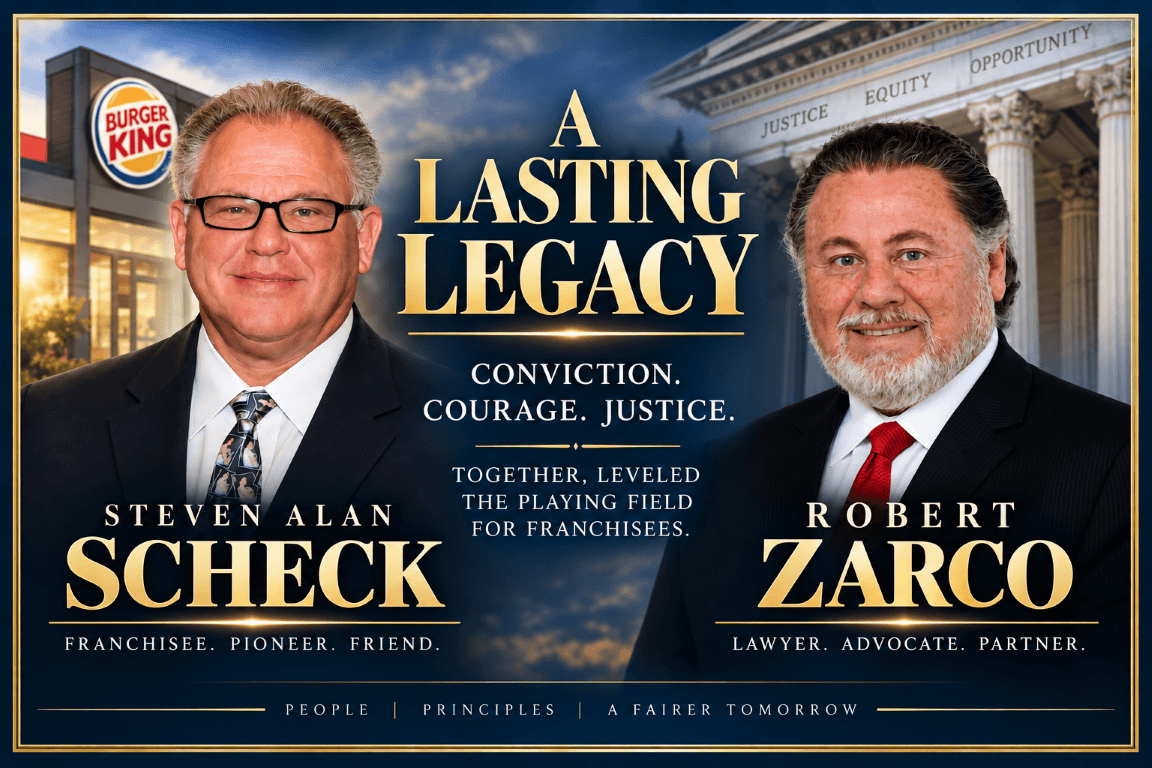 Reviewed and Approved by Robert Zarco
Some legal cases begin as ordinary business disputes. A few come to stand for something much larger.
For Steven Alan Scheck, the issue was about justice and principle: a franchisee who had invested his livelihood in a business should have the right to expect that his franchisor would deal with him fairly.
For Robert Zarco, then a young Miami commercial trial lawyer, Scheck’s fight would become far more than an early case. It would become a defining battle, one that would test his convictions, help launch his own law practice, and set the course for a career taking on powerful adversaries “Against All Odds.”
More than three decades later, Scheck v. Burger King Corp. remains an important chapter in franchise law and in Zarco’s lifelong commitment to leveling the playing field for franchisees and business owners facing substantially more powerful commercial adversaries.
With Scheck’s passing at age 77, Zarco Einhorn Salkowski, P.A. remembers not only the franchisee behind a landmark legal battle, but also the entrepreneur, pioneer, friend, and man whose willingness to stand up for what he believed was right helped change the conversation about the relationship between franchisors and franchisees.
Reviewed and Approved by Robert Zarco
Some legal cases begin as ordinary business disputes. A few come to stand for something much larger.
For Steven Alan Scheck, the issue was about justice and principle: a franchisee who had invested his livelihood in a business should have the right to expect that his franchisor would deal with him fairly.
For Robert Zarco, then a young Miami commercial trial lawyer, Scheck’s fight would become far more than an early case. It would become a defining battle, one that would test his convictions, help launch his own law practice, and set the course for a career taking on powerful adversaries “Against All Odds.”
More than three decades later, Scheck v. Burger King Corp. remains an important chapter in franchise law and in Zarco’s lifelong commitment to leveling the playing field for franchisees and business owners facing substantially more powerful commercial adversaries.
With Scheck’s passing at age 77, Zarco Einhorn Salkowski, P.A. remembers not only the franchisee behind a landmark legal battle, but also the entrepreneur, pioneer, friend, and man whose willingness to stand up for what he believed was right helped change the conversation about the relationship between franchisors and franchisees.
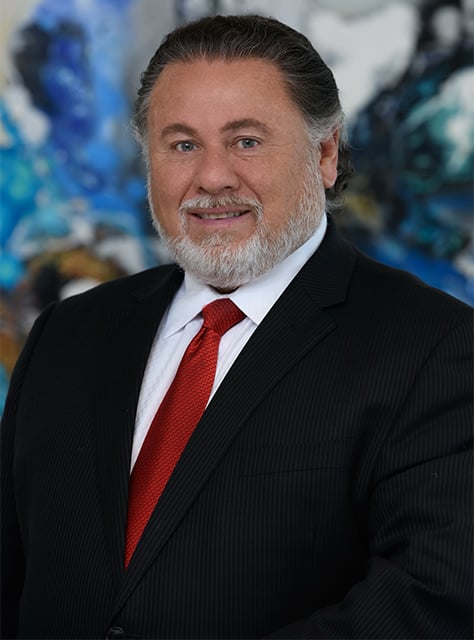 For Zarco, Scheck became far more than an early case.
It demonstrated that one franchisee, given the opportunity to be heard, could challenge an industry giant and influence the rights of those who followed.
Today, Robert Zarco is Founder and Managing Partner of Zarco Einhorn Salkowski, P.A., appropriately known as The Great Equalizers.
Over the decades that followed, Zarco and the firm have represented thousands of franchisees associated with more than 500 franchise systems across 44+ states and 20+ countries, including 40+ franchisee associations, continuing a mission centered on creating leverage and leveling the playing field.
The firm also continues to utilize creative hybrid contingency and results-accomplished fee arrangements in appropriate cases, helping qualifying franchisees and business entrepreneurs pursue their rights when the cost of complex commercial litigation might otherwise place meaningful legal representation beyond their reach.
The philosophy and lessons that emerged from Scheck’s fight remains remarkably simple and relevant over three decades later.
Access to justice should not depend upon the size of the opponent.
For Zarco, Scheck became far more than an early case.
It demonstrated that one franchisee, given the opportunity to be heard, could challenge an industry giant and influence the rights of those who followed.
Today, Robert Zarco is Founder and Managing Partner of Zarco Einhorn Salkowski, P.A., appropriately known as The Great Equalizers.
Over the decades that followed, Zarco and the firm have represented thousands of franchisees associated with more than 500 franchise systems across 44+ states and 20+ countries, including 40+ franchisee associations, continuing a mission centered on creating leverage and leveling the playing field.
The firm also continues to utilize creative hybrid contingency and results-accomplished fee arrangements in appropriate cases, helping qualifying franchisees and business entrepreneurs pursue their rights when the cost of complex commercial litigation might otherwise place meaningful legal representation beyond their reach.
The philosophy and lessons that emerged from Scheck’s fight remains remarkably simple and relevant over three decades later.
Access to justice should not depend upon the size of the opponent.
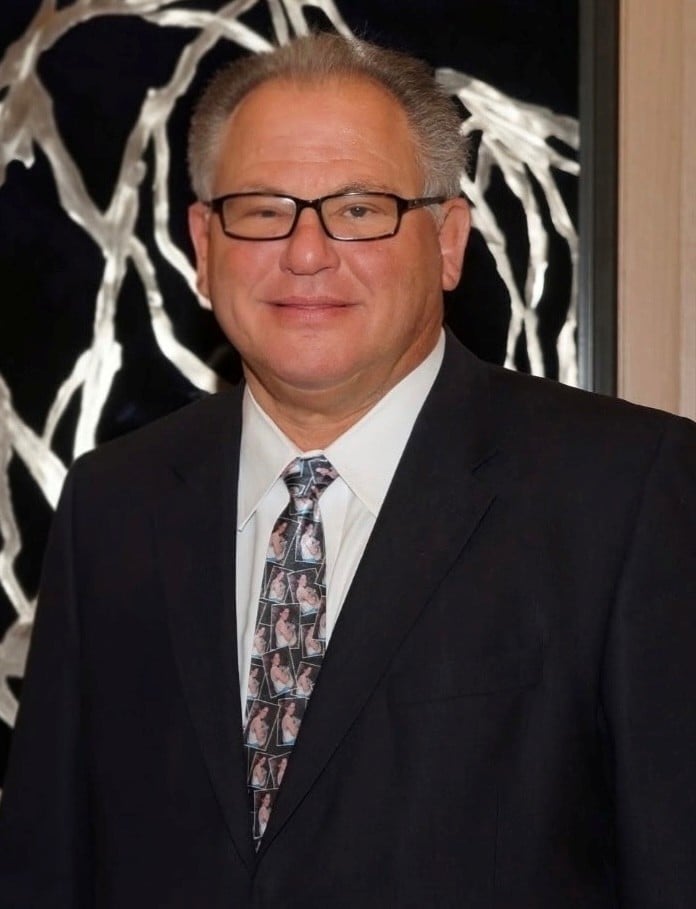 Steven Scheck’s life did not end with the litigation that bears his name.
In 1993, he moved to Los Angeles, where he became General Manager of the Sportsmen’s Lodge Hotel in Studio City, a position he held for many years.
His professional life reflected what those who knew him understood personally: Steve Scheck was an entrepreneur and hospitality professional who believed deeply in his businesses, his relationships, and his principles.
Steven Scheck never set out to become the name behind a consequential franchise case. He was a businessman who believed he had been wronged and had the conviction to stand up for what he believed was right, even when the odds were against him.
There could have been no Scheck v. Burger King Corp. without Steven Scheck. It was his livelihood at stake, his willingness to fight, and his faith in a young lawyer that set everything that followed in motion…with a mission that continues to this day.
And the legacy of Robert Zarco and the law firm he founded will always carry a piece of Steve Scheck’s legacy with it.
Steve Scheck believed in Robert Zarco. Robert Zarco believed in Steve’s cause. Together, they left an enduring mark on the franchise landscape, helping level the playing field between franchisors and franchisees and showing what can happen when conviction meets courage.
The rest is history.]]>
Steven Scheck’s life did not end with the litigation that bears his name.
In 1993, he moved to Los Angeles, where he became General Manager of the Sportsmen’s Lodge Hotel in Studio City, a position he held for many years.
His professional life reflected what those who knew him understood personally: Steve Scheck was an entrepreneur and hospitality professional who believed deeply in his businesses, his relationships, and his principles.
Steven Scheck never set out to become the name behind a consequential franchise case. He was a businessman who believed he had been wronged and had the conviction to stand up for what he believed was right, even when the odds were against him.
There could have been no Scheck v. Burger King Corp. without Steven Scheck. It was his livelihood at stake, his willingness to fight, and his faith in a young lawyer that set everything that followed in motion…with a mission that continues to this day.
And the legacy of Robert Zarco and the law firm he founded will always carry a piece of Steve Scheck’s legacy with it.
Steve Scheck believed in Robert Zarco. Robert Zarco believed in Steve’s cause. Together, they left an enduring mark on the franchise landscape, helping level the playing field between franchisors and franchisees and showing what can happen when conviction meets courage.
The rest is history.]]>